Artificial Intelligence (AI) is transforming many industries, especially creative fields like graphic design, animation, video editing, content creation, and digital marketing. With AI tools now capable of generating images, writing content, editing videos, and even creating music, many people are asking an important question: Will AI replace human creators?
The short answer is no. AI is not replacing creators; instead, it is becoming a powerful tool that helps creators work faster and more efficiently. The future of creativity lies in collaboration between human imagination and AI technology.
In this article, we explore how AI affects creative industries and why human creativity will always remain essential.
The Rise of AI in Creative Industries
AI-powered tools are now widely used by designers, artists, marketers, and video creators. These tools can generate images, suggest design layouts, automate editing tasks, and analyze audience preferences.
For example, AI can help creators:
-
Generate visual concepts and artwork
-
Edit videos automatically
-
Create social media graphics
-
Suggest content ideas
-
Improve productivity and workflow
These technologies are changing how creative professionals work, making production faster and more efficient.
What AI Can Do Well
AI excels at tasks that involve automation, data processing, and pattern recognition. In creative industries, AI can perform several helpful functions.
1. Speeding Up Repetitive Tasks
Many creative tasks such as background removal, color correction, resizing images, and basic editing can now be automated by AI. This saves time and allows creators to focus on more meaningful work.
2. Generating Ideas and Concepts
AI tools can generate design variations, visual concepts, and creative suggestions. This helps creators brainstorm ideas and explore new styles quickly.
3. Improving Workflow Efficiency
AI-powered tools can analyze large amounts of data and provide recommendations. For example, marketing tools can suggest trending topics or the best time to post content online.
What AI Cannot Replace
Despite its capabilities, AI still has major limitations. There are several aspects of creativity that require human intelligence.
1. Original Creativity
AI generates content based on patterns from existing data, but it does not truly create original ideas the way humans do. Human creators bring unique experiences, emotions, and perspectives into their work.
2. Emotional Connection
Creative work often connects with audiences through emotions, storytelling, and cultural understanding. Humans naturally understand emotions and social contexts, while AI lacks genuine emotional intelligence.
3. Strategic Thinking
Creators often make strategic decisions based on brand identity, audience psychology, and storytelling goals. AI can assist with suggestions, but humans are still needed to guide the creative direction.
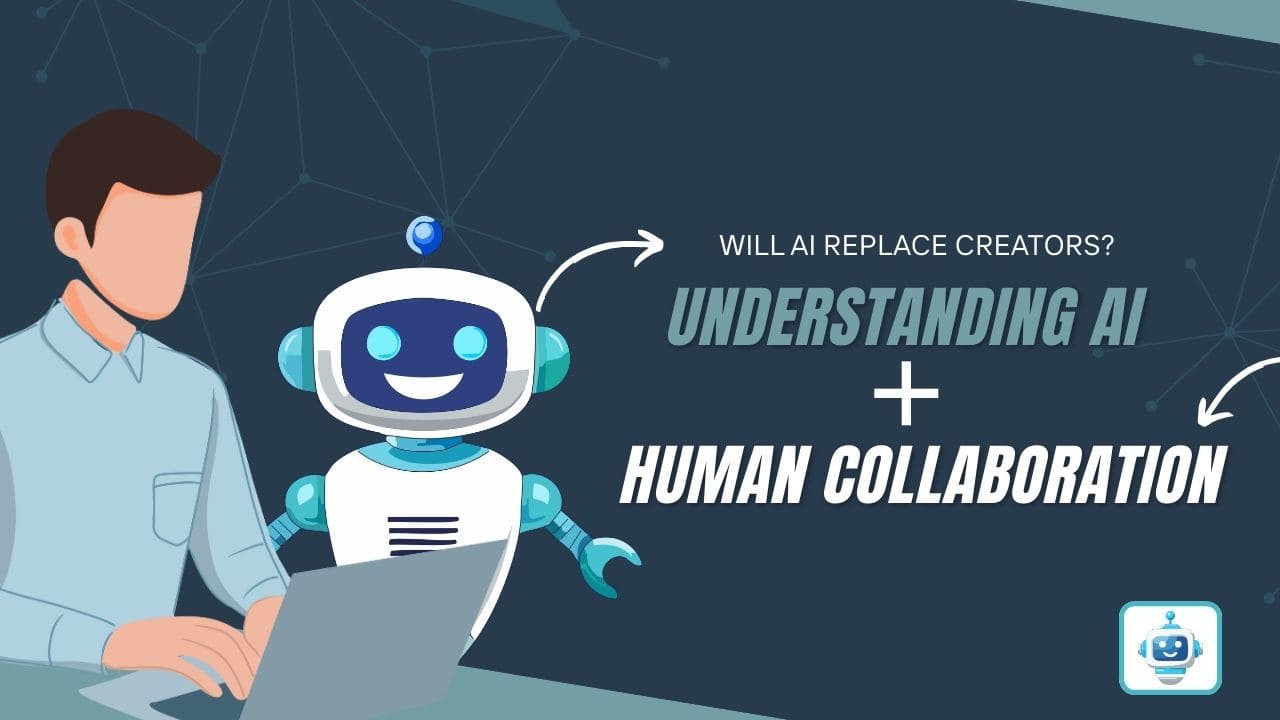
The Future: AI + Human Collaboration
Instead of replacing creators, AI is becoming a creative assistant. Many professionals are already combining AI tools with human creativity to produce better results.
This collaboration allows creators to:
-
Generate ideas quickly
-
Experiment with new design styles
-
Automate technical tasks
-
Focus more on storytelling and innovation
For example, a designer might use AI to generate visual concepts and then refine them with their own artistic style.
New Career Opportunities
As AI becomes more common in creative industries, new job roles are emerging. Professionals who understand both creative skills and AI tools will have strong career opportunities.
Some emerging roles include:
-
AI-assisted Graphic Designer
-
Prompt Engineer
-
AI Content Strategist
-
Motion Graphics Designer using AI tools
-
Creative AI Specialist
Learning how to work with AI rather than competing with it will be a key advantage for future creators.
Why Human Creativity Will Always Matter
Creativity is not just about producing visuals or content—it involves imagination, emotion, storytelling, and cultural understanding. These qualities are deeply human and cannot be fully replicated by machines.
The most successful creators in the future will not avoid AI; instead, they will use AI as a tool to enhance their creativity.
Conclusion
AI is transforming creative industries by automating tasks, generating ideas, and improving productivity. However, it cannot replace the human imagination, emotional understanding, and strategic thinking that define great creative work.
The future of design, animation, content creation, and digital media will be shaped by AI and human collaboration. Creators who learn how to use AI tools effectively will have a major advantage in the evolving creative landscape.
Instead of fearing AI, creative professionals should embrace it as a powerful partner in the creative process.
FAQs
1. Will AI completely replace creative professionals?
No. AI can assist with creative tasks, but it cannot replace human creativity, emotions, and storytelling abilities.
2. How are creators using AI today?
Creators use AI for generating ideas, editing content, automating design tasks, and improving workflow efficiency.
3. Which creative industries are most affected by AI?
Industries such as graphic design, animation, video production, marketing, and digital content creation are heavily using AI tools.
4. Is learning AI tools important for designers and creators?
Yes. Understanding AI tools can help creators work faster, explore new creative ideas, and stay competitive in the modern digital industry.
5. Can beginners use AI creative tools?
Yes. Many AI tools are beginner-friendly and allow users to create visuals, videos, and designs with simple prompts.