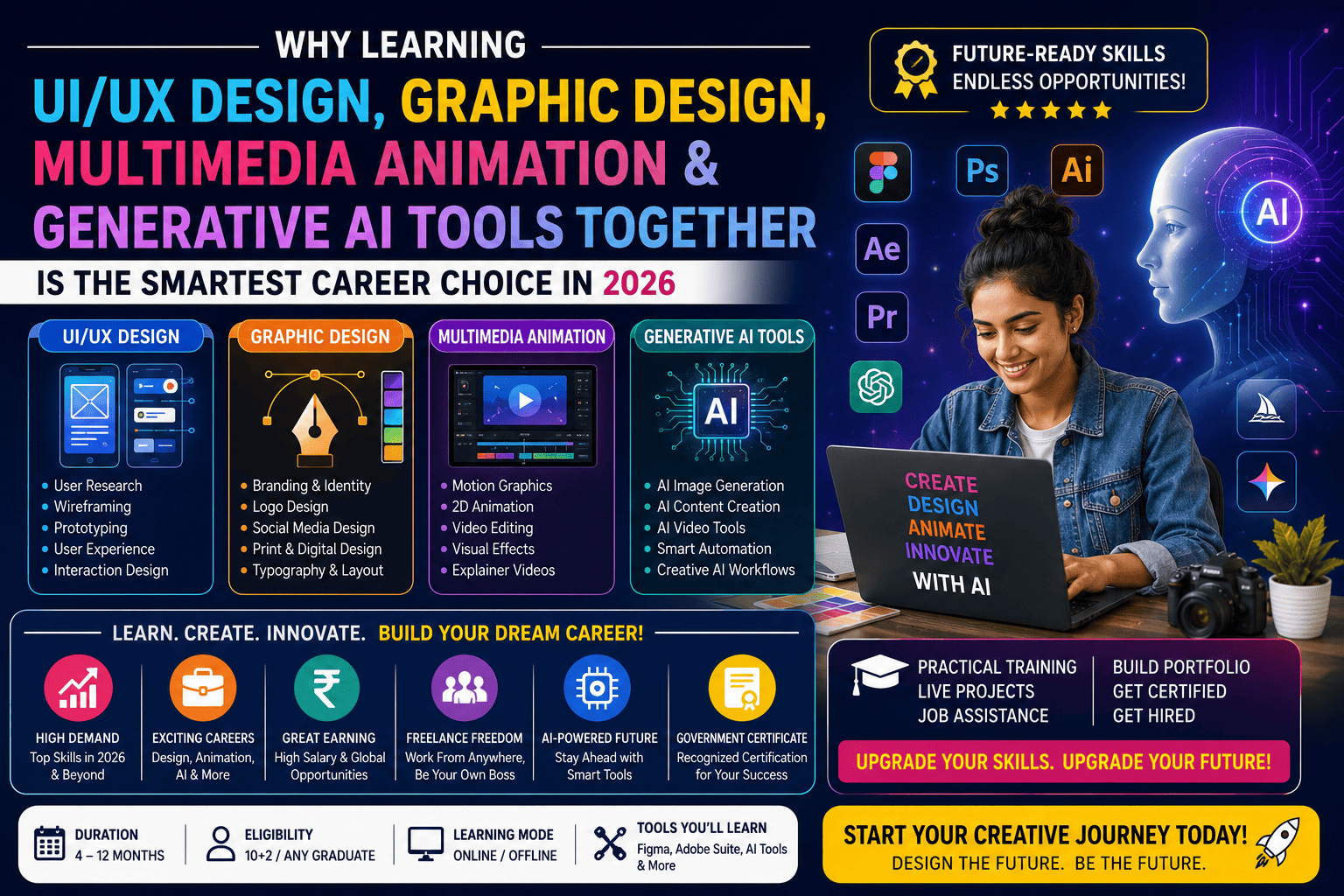
The creative industry is evolving faster than ever before. Artificial Intelligence is transforming how designers create, businesses market products, and brands connect with customers. Companies are no longer looking for professionals with expertise in just one creative skill—they want versatile digital creators who can design, animate, create engaging content, and leverage AI-powered tools.
In 2026, combining UI/UX Design, Graphic Design, Multimedia Animation, and Generative AI Tools into one learning journey gives students and professionals a significant competitive advantage. Whether you aspire to work for leading companies, launch a freelance business, or build your own brand, mastering these complementary skills prepares you for the future of creative work.
This guide explores why this combination is one of the smartest career investments in 2026, what you’ll learn, career opportunities, salary expectations, and how a Government Certificate with practical training can strengthen your professional profile.
The Digital Creative Industry Is Changing
Businesses today compete in a digital-first world. Every product, service, and brand requires:
- Attractive visual identity
- User-friendly websites and mobile apps
- Engaging social media content
- Promotional videos
- Interactive animations
- AI-assisted content creation
- Digital marketing assets
Instead of hiring multiple specialists, organizations increasingly value professionals who can manage multiple aspects of digital creativity while using AI to improve productivity.
This shift makes multi-disciplinary creative professionals among the most in-demand talent in 2026.
Why Learn These Four Skills Together?
Each skill complements the others, creating a complete creative workflow.
1. UI/UX Design – Build Exceptional Digital Experiences
UI (User Interface) and UX (User Experience) Design focus on creating intuitive and visually appealing digital products.
You’ll learn:
- User Research
- Wireframing
- User Journey Mapping
- Information Architecture
- Prototyping
- Design Systems
- Responsive Web Design
- Mobile App Design
- Usability Testing
Career Opportunities
- UI Designer
- UX Designer
- Product Designer
- Interaction Designer
- UX Researcher
2. Graphic Design – Build Strong Visual Brands
Graphic Design remains the foundation of digital communication.
Students learn:
- Logo Design
- Brand Identity
- Social Media Design
- Packaging Design
- Advertising Creatives
- Typography
- Color Theory
- Print & Digital Media
Popular Software
- Adobe Photoshop
- Adobe Illustrator
- Adobe InDesign
Career Roles
- Graphic Designer
- Brand Designer
- Creative Designer
- Visual Communication Specialist
3. Multimedia Animation – Bring Ideas to Life
Static visuals alone are no longer enough. Motion content captures attention across websites, advertisements, and social media.
Students learn:
- Motion Graphics
- 2D Animation
- Kinetic Typography
- Explainer Videos
- Character Animation Basics
- Video Editing
- Visual Effects
- Promotional Video Creation
Software Covered
- Adobe After Effects
- Adobe Premiere Pro
Career Options
- Multimedia Designer
- Motion Graphic Designer
- Animation Artist
- Video Editor
4. Generative AI Tools – The Future of Creative Work
Artificial Intelligence has become a powerful creative partner.
Modern designers use AI to:
- Generate design concepts
- Create marketing visuals
- Produce AI-generated videos
- Develop creative storyboards
- Write content and scripts
- Generate presentations
- Enhance photographs
- Speed up editing workflows
- Automate repetitive creative tasks
Popular AI Tools
- Adobe Firefly
- ChatGPT
- Midjourney
- DALL·E
- Runway
- Canva AI
- Microsoft Copilot
- Figma AI
Learning how to work with AI—not replace creativity with it—is becoming a critical professional skill.
Why Companies Prefer Multi-Skilled Creative Professionals
Today’s employers seek candidates who can:
- Design mobile apps
- Create brand identities
- Produce social media creatives
- Animate promotional content
- Edit marketing videos
- Use AI tools efficiently
- Collaborate across design and marketing teams
This versatility improves productivity and reduces project turnaround time, making you a valuable asset in agencies, startups, and enterprise organizations.
Benefits of Learning Everything in One Course
A comprehensive Digital Creative Course helps you:
- Learn multiple industry-relevant skills
- Build an impressive portfolio
- Work on live projects
- Understand complete creative workflows
- Increase employability
- Expand freelance opportunities
- Adapt to AI-driven industries
- Stay competitive in a rapidly evolving market
Who Should Enroll?
This course is suitable for:
- Students after 10th or 12th
- College Students
- Graduates
- Working Professionals
- Career Changers
- Freelancers
- Entrepreneurs
- Content Creators
- YouTubers
- Social Media Managers
No prior design experience is required for most beginner-friendly programs.
Government Certificate Benefits
A Government Certificate can enhance your professional profile by:
- Demonstrating recognized skill development
- Strengthening your resume
- Improving interview credibility
- Supporting applications for jobs and internships
- Building trust with freelance clients
For the best career outcomes, combine certification with a strong portfolio and hands-on project experience.
Career Opportunities in 2026
After completing this learning path, you may pursue roles such as:
- UI Designer
- UX Designer
- Product Designer
- Graphic Designer
- Visual Designer
- Motion Graphic Artist
- Multimedia Designer
- Video Editor
- AI Creative Designer
- AI Content Creator
- Brand Designer
- Digital Content Specialist
- Creative Strategist
- Design Consultant
- Freelance Creative Professional
Expected Salary in India (2026)
Salary depends on skills, portfolio quality, location, and employer.
| Experience | Expected Annual Salary |
|---|---|
| Fresher | ₹3.5–6 LPA |
| 1–3 Years | ₹5–9 LPA |
| 3–5 Years | ₹8–14 LPA |
| Senior Professionals | ₹15–25+ LPA |
Freelancers and agency owners can earn significantly more based on project value and international clients.
Essential Skills You’ll Build
A future-ready creative course should help you develop:
- Design Thinking
- User Research
- Creative Problem Solving
- Visual Communication
- Branding
- Storytelling
- Motion Design
- Video Production
- AI Prompting
- AI-Assisted Design
- Collaboration
- Presentation Skills
- Portfolio Development
Why Practical Training Matters
Employers value practical skills over theoretical knowledge alone.
Choose a course that includes:
- Live Industry Projects
- Portfolio Development
- Internship Opportunities
- Practical Assignments
- Mock Interviews
- Resume Building
- Career Guidance
- Placement Assistance
- AI Tool Workshops
A strong portfolio showcasing real projects often has a greater impact than certificates alone.
Future Trends in Creative Careers
The demand for creative professionals is expected to grow as businesses continue investing in digital experiences.
Emerging trends include:
- AI-Assisted UI/UX Design
- Personalized User Experiences
- Motion Branding
- AI Video Production
- Interactive Multimedia
- Immersive Web Experiences
- AR/VR Content
- Intelligent Design Systems
- Automated Creative Workflows
- Cross-Platform Content Creation
Professionals who combine creativity with AI skills will be better positioned for long-term career success.
Frequently Asked Questions (FAQs)
1. Why should I learn UI/UX Design, Graphic Design, Multimedia Animation, and AI tools together?
These skills complement each other and prepare you for complete digital creative workflows, making you more versatile and employable.
2. Are Generative AI tools replacing designers?
No. AI assists with repetitive tasks and idea generation, but human creativity, strategy, and problem-solving remain essential.
3. Is this course suitable for beginners?
Yes. Most comprehensive programs are designed for beginners and gradually progress to advanced topics.
4. What software will I learn?
Commonly taught tools include Figma, Adobe Photoshop, Adobe Illustrator, Adobe After Effects, Adobe Premiere Pro, and leading Generative AI platforms.
5. Can I become a freelancer after completing this course?
Yes. With a strong portfolio and practical experience, freelancing is an excellent career option in design, animation, and AI-powered content creation.
6. Is a Government Certificate important?
A Government Certificate adds credibility to your qualifications and can strengthen your resume, especially when combined with practical skills and a portfolio.
7. What industries hire these professionals?
Technology companies, startups, advertising agencies, media houses, e-commerce businesses, educational platforms, gaming companies, healthcare organizations, and digital marketing agencies all hire professionals with these skills.
8. Is learning AI necessary for designers in 2026?
Yes. Understanding AI tools is becoming increasingly valuable because they improve productivity, accelerate creative workflows, and support innovation across the design industry.
Conclusion
In 2026, creativity alone is no longer enough. The most successful professionals combine UI/UX Design, Graphic Design, Multimedia Animation, and Generative AI Tools to deliver complete digital experiences that meet the needs of modern businesses.
By mastering these complementary disciplines through practical training, live projects, portfolio development, and a Government Certificate, you’ll be equipped for careers in design, technology, media, marketing, and entrepreneurship.
Whether you aim to secure a high-paying job, work as a freelancer, or launch your own creative agency, investing in a comprehensive Digital Creative Course is one of the smartest career decisions you can make.