
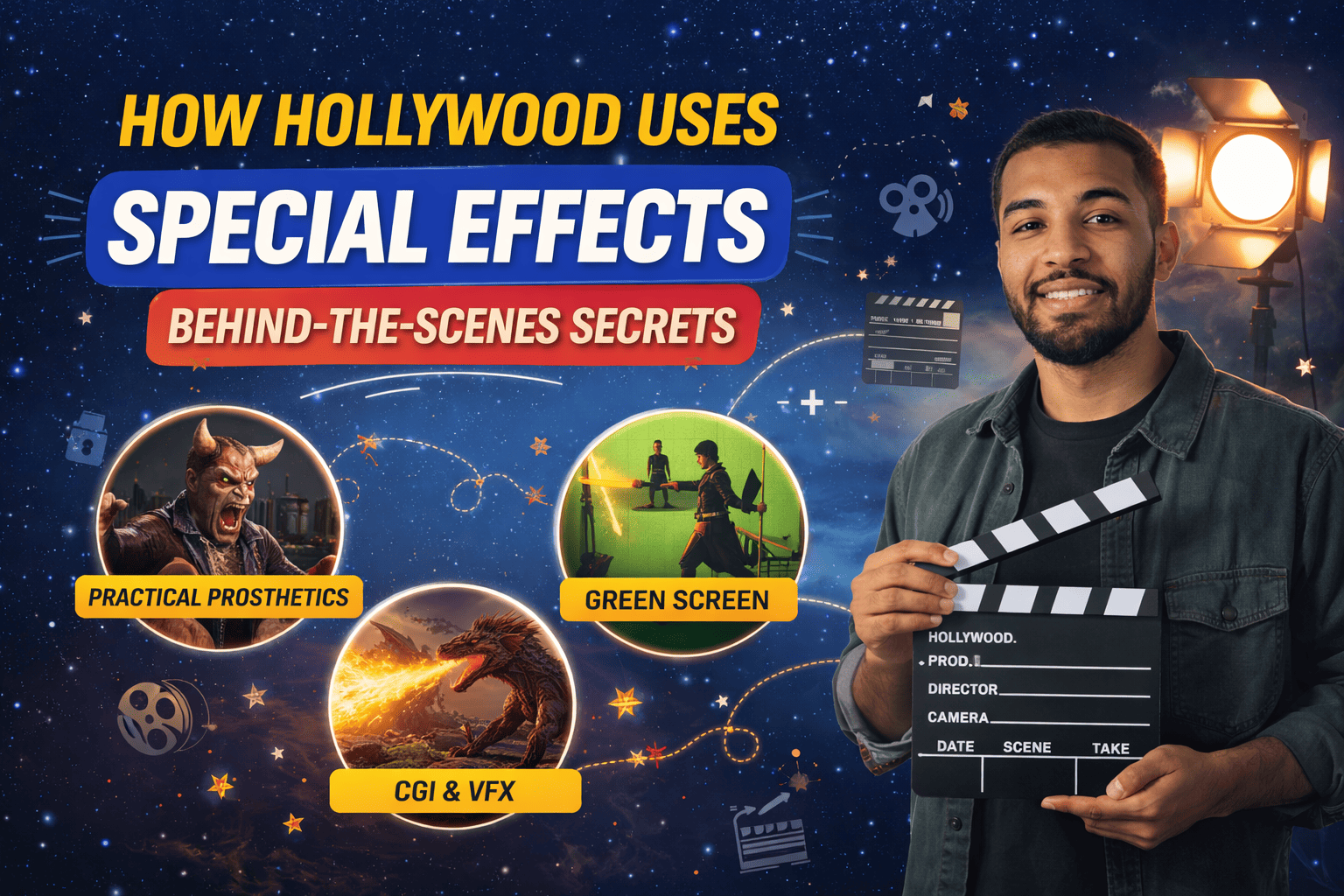
Movies today look more spectacular than ever. From massive explosions and alien worlds to superheroes flying across cities, many of these scenes are created using special effects. Hollywood filmmakers use a combination of visual effects (VFX), computer graphics, and practical effects to bring incredible stories to life.
For students interested in multimedia, video editing, motion graphics, or VFX training, understanding how Hollywood uses special effects can provide valuable insights into the creative and technical process behind blockbuster films.
In this article, we explore the behind-the-scenes secrets of Hollywood special effects and how these techniques create the magic we see on screen.
1. Practical Effects: Real Effects on Set
Before computers became powerful enough for advanced graphics, filmmakers relied heavily on practical effects. These are physical effects created during filming.
Examples include:
-
Explosions and fire effects
-
Prosthetic makeup for characters
-
Miniature models of cities or vehicles
-
Mechanical creatures or animatronics
Even today, many Hollywood films still use practical effects because they look more realistic. Filmmakers often combine practical effects with digital effects to achieve the best results.
2. Green Screen Technology
One of the most famous techniques in Hollywood is the green screen (chroma key) method.
Actors perform in front of a green or blue background, and later editors replace that background with a digital environment.
For example, green screen technology is used to create:
-
Fantasy worlds
-
Space scenes
-
Historical cities
-
Dangerous environments
This technique allows filmmakers to create scenes that would be impossible or extremely expensive to film in real life.
Students learning video editing, VFX, or multimedia design courses often practice green screen editing using software like Adobe After Effects or Premiere Pro.
3. Computer-Generated Imagery (CGI)
Computer-Generated Imagery (CGI) is one of the most powerful tools used in modern filmmaking. CGI allows artists to create characters, creatures, and environments entirely using computers.
Some famous CGI elements in movies include:
-
Monsters and aliens
-
Superhero powers
-
Massive battle scenes
-
Futuristic cities
Creating CGI requires a team of professionals including 3D modelers, animators, texture artists, and visual effects specialists.
Many students interested in multimedia or motion graphics training learn CGI tools such as Blender, Maya, or Cinema 4D to create similar effects.
4. Motion Capture Technology
Motion capture, also known as MoCap, is used to record the movements of actors and apply them to digital characters.
Actors wear special suits with sensors that track body movement. This data is then transferred to computer-generated characters.
Motion capture has been used to create some of the most famous movie characters, including:
-
Digital creatures
-
Animated animals
-
Fantasy characters
This technology helps digital characters move naturally and realistically.
5. Digital Compositing
Digital compositing is the process of combining multiple visual elements into a single scene. For example, a final movie shot might include:
-
Live actors
-
CGI environments
-
Green screen backgrounds
-
Special effects like smoke, fire, or weather
VFX artists combine all these elements using advanced editing software to create a seamless final image.
Compositing is a key skill taught in video editing and motion graphics courses.
6. Miniature Models and Scale Effects
Although CGI is widely used today, Hollywood still sometimes uses miniature models to create realistic scenes.
For example:
-
Model buildings for destruction scenes
-
Small-scale vehicles or spacecraft
-
Miniature city landscapes
When filmed carefully, these models look like full-sized structures on screen. This technique has been used in many classic movies and is still used in modern productions.
7. Sound and Visual Effects Combination
Special effects are not only visual. Sound design plays an important role in making effects believable.
For example:
-
Explosions are enhanced with powerful sound effects
-
Creature sounds are created by mixing multiple audio sources
-
Environmental sounds add realism to scenes
The combination of visual effects, sound effects, and editing creates the immersive experience audiences enjoy in theaters.
Why Special Effects Skills Are in High Demand
With the growth of streaming platforms, gaming, and digital content, the demand for professionals skilled in VFX, video editing, motion graphics, and multimedia design is increasing rapidly.
Students interested in the creative industry often join multimedia training institutes, video editing courses, or motion graphics classes to learn the tools used by professionals.
Popular career roles in this field include:
-
VFX Artist
-
Motion Graphics Designer
-
Video Editor
-
3D Animator
-
Multimedia Designer
Learning these skills can open exciting opportunities in film production, advertising, gaming, and digital media.
Conclusion
Hollywood movies may look magical, but behind every incredible scene is a team of talented artists and advanced technology. Techniques like green screen filming, CGI, motion capture, practical effects, and digital compositing help filmmakers create the stunning visuals we see on screen.
For students passionate about creativity and storytelling, learning multimedia, video editing, motion graphics, or VFX skills can be the first step toward working in the world of visual effects.
With the right training and practice, anyone can learn the techniques used by Hollywood professionals and start building a career in the exciting field of visual effects.
FAQs
1. What are special effects in movies?
Special effects are techniques used to create visual or physical illusions in films, such as explosions, CGI characters, or fantasy environments.
2. What is the difference between VFX and special effects?
Special effects usually happen during filming, while visual effects (VFX) are created digitally during post-production.
3. Which software is used for Hollywood VFX?
Popular tools include Adobe After Effects, Blender, Autodesk Maya, Houdini, and Cinema 4D.
4. Can beginners learn VFX and motion graphics?
Yes. Beginners can learn these skills through multimedia courses, motion graphics training, and video editing classes.
5. Is VFX a good career option?
Yes. With the growth of films, OTT platforms, gaming, and digital media, VFX and multimedia professionals are in high demand worldwide.