Completing Class 12 is an exciting milestone, but it also brings one of the biggest decisions of your life—choosing the right career path. With technology, Artificial Intelligence (AI), and digital transformation reshaping industries, creative careers have become more diverse and rewarding than ever.
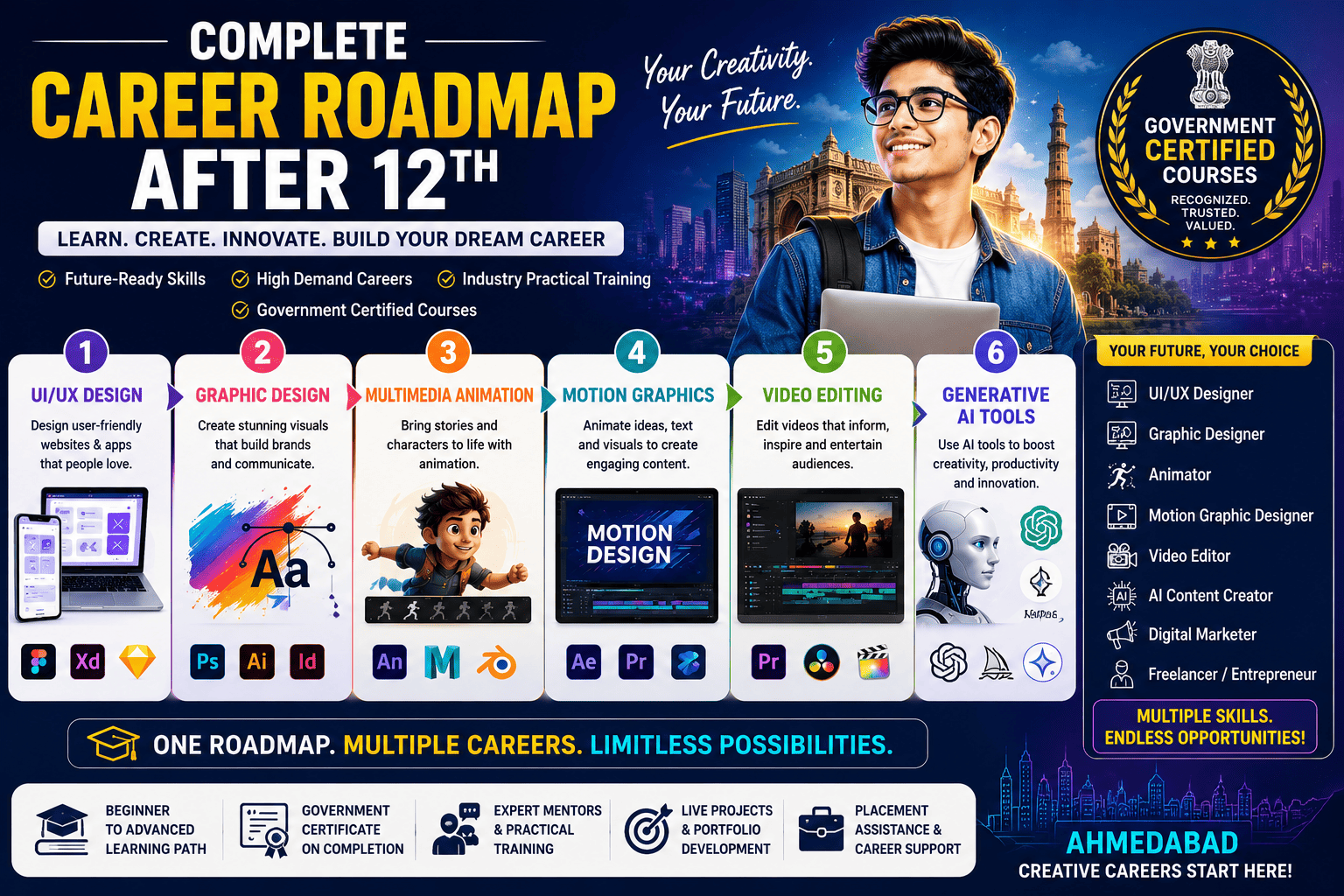
If you enjoy creativity, technology, design, storytelling, or digital content, learning UI/UX Design, Graphic Design, Multimedia Animation, Motion Graphics, Video Editing, and Generative AI Tools can help you build a future-ready career. This guide explains each field, the skills you will learn, career opportunities, and how a Government Certified professional course can prepare you for the digital economy in 2026.
Why Choose a Creative Career After 12th?
The creative industry is expanding across sectors such as technology, advertising, media, entertainment, education, healthcare, retail, and e-commerce.
Organizations increasingly need professionals who can:
- Design intuitive websites and mobile apps
- Build memorable visual identities
- Produce engaging animations
- Edit professional-quality videos
- Create AI-assisted content
- Communicate ideas through digital media
Creative careers combine innovation with practical problem-solving, making them suitable for students who enjoy both artistic and technical work.
Step 1: Build a Strong Design Foundation with Graphic Design
Graphic Design develops the visual communication skills that form the basis of many creative careers.
Skills You’ll Learn
- Typography
- Color Theory
- Layout Design
- Logo Design
- Brand Identity
- Print Design
- Social Media Creatives
- Digital Illustration
Career Opportunities
- Graphic Designer
- Brand Designer
- Marketing Designer
- Visual Designer
- Creative Executive
Step 2: Learn UI/UX Design
UI/UX Design focuses on creating digital products that are attractive, functional, and easy to use.
Skills You’ll Learn
- User Research
- Wireframing
- Prototyping
- User Journey Mapping
- Design Systems
- Responsive Web Design
- Mobile App Design
- Usability Testing
Career Opportunities
- UI Designer
- UX Designer
- Product Designer
- Web Designer
- Interaction Designer
Step 3: Explore Multimedia Animation
Multimedia Animation combines graphics, storytelling, audio, and animation to create engaging digital experiences.
Skills You’ll Learn
- 2D Animation
- Storyboarding
- Character Animation
- Visual Storytelling
- Multimedia Production
- Animation Principles
Career Opportunities
- Multimedia Artist
- Animator
- Educational Content Creator
- Animation Designer
Step 4: Master Motion Graphics
Motion Graphics bring visual elements to life using animation techniques.
Skills You’ll Learn
- Motion Design
- Kinetic Typography
- Promotional Videos
- Explainer Videos
- Title Animation
- Social Media Motion Content
Career Opportunities
- Motion Graphic Designer
- Broadcast Designer
- Advertising Motion Artist
- Content Designer
Step 5: Develop Video Editing Skills
Video is one of the most powerful communication tools in today’s digital world.
Skills You’ll Learn
- Video Editing
- Storytelling
- Audio Synchronization
- Color Correction
- Transitions
- Short-Form Content
- Long-Form Video Production
Career Opportunities
- Video Editor
- Content Creator
- YouTube Editor
- Corporate Video Editor
- Social Media Video Specialist
Step 6: Learn Generative AI Tools
Generative AI is becoming a valuable assistant for designers, marketers, filmmakers, and content creators.
Skills You’ll Learn
- AI Content Creation
- AI Image Generation
- AI Video Assistance
- Prompt Writing
- Workflow Automation
- Productivity Tools
Career Opportunities
- AI Content Creator
- Creative AI Specialist
- AI Workflow Consultant
- Digital Innovation Professional
Why Learn Multiple Skills Together?
Today’s employers increasingly value professionals who can work across multiple creative disciplines.
For example, launching a digital campaign may involve:
- Designing a website interface
- Creating a brand identity
- Producing promotional videos
- Developing motion graphics
- Using AI tools to accelerate content creation
A multidisciplinary skill set helps you adapt to evolving industry requirements and opens opportunities across design, technology, and media.
Benefits of a Government Certified Course
A Government Certified course can add credibility to your resume by demonstrating structured learning through a recognized program.
In addition to certification, employers often evaluate:
- Practical projects
- Portfolio quality
- Technical skills
- Communication
- Creativity
- Teamwork
- Continuous learning
Before enrolling, always verify the recognition and scope of any certification offered.
Who Should Follow This Career Roadmap?
This roadmap is ideal for:
- Students after Class 12
- Students after Class 10
- Diploma aspirants
- College students
- Graduates
- Career changers
- Freelancers
- Content creators
- Entrepreneurs
Career Opportunities After Completing These Skills
Learning these creative skills can prepare you for a variety of roles, including:
- UI Designer
- UX Designer
- Graphic Designer
- Motion Graphic Designer
- Multimedia Artist
- Video Editor
- Brand Designer
- Creative Executive
- Digital Content Creator
- AI Content Specialist
- Social Media Designer
- Freelancer
- Entrepreneur
Skills Employers Will Value in 2026
Recruiters increasingly seek professionals with a balance of creativity and technology.
Important skills include:
- User Experience Design
- Visual Communication
- Motion Design
- Video Production
- AI Literacy
- Design Thinking
- Collaboration
- Communication
- Creative Problem Solving
- Portfolio Development
How to Build a Strong Portfolio
A portfolio demonstrates your practical abilities and creative thinking.
Include projects such as:
- Mobile App UI Designs
- Website Interfaces
- Brand Identity Systems
- Logo Collections
- Motion Graphics Videos
- Short Promotional Films
- Animation Projects
- AI-Assisted Creative Work
Frequently Asked Questions (FAQs)
1. Which creative course is best after Class 12?
The best course depends on your interests. UI/UX Design, Graphic Design, Multimedia Animation, Motion Graphics, Video Editing, and Generative AI all offer promising career opportunities.
2. Can beginners learn these skills?
Yes. Most professional training programs start with fundamentals and gradually progress to advanced concepts and industry projects.
3. Is coding required for UI/UX Design?
Not necessarily. While understanding basic web technologies can be beneficial, many UI/UX roles focus on design, research, and user experience.
4. Are AI tools replacing designers and animators?
AI automates repetitive tasks, but creativity, storytelling, empathy, and strategic thinking remain essential human skills.
5. Can I freelance after learning these skills?
Yes. Many professionals work independently, offering design, animation, video editing, branding, and AI-assisted creative services to businesses and startups.
6. Does a Government Certificate guarantee employment?
No. Certification can strengthen your profile, but employers usually evaluate your portfolio, practical skills, interview performance, and relevant experience.
7. Which industries hire creative professionals?
Technology companies, advertising agencies, media organizations, e-commerce businesses, educational institutions, healthcare companies, financial organizations, startups, and manufacturing firms all hire creative professionals.
8. Should I specialize in one field or learn multiple skills?
Building expertise in one area while developing complementary skills such as UI/UX Design, Graphic Design, Video Editing, Motion Graphics, and AI Tools can increase career flexibility and long-term growth.
Conclusion
The creative industry offers exciting opportunities for students who want to combine imagination with technology. Whether your goal is to design digital products, create engaging visuals, produce professional videos, or explore AI-powered creativity, learning UI/UX Design, Graphic Design, Multimedia Animation, Motion Graphics, Video Editing, and Generative AI Tools provides a strong foundation for the future.
A structured learning path supported by practical projects, portfolio development, continuous upskilling, and a recognized Government Certificate can help you prepare for careers across technology, media, marketing, entertainment, and entrepreneurship. By staying curious and embracing lifelong learning, you can build a rewarding creative career in the AI-driven digital economy of 2026 and beyond.